

Scale-Up & Custom Manufacturing
Move from a Developed Route to a Manufacturing Plan
Discuss Your Scale-Up or Manufacturing RequirementA process that works in the laboratory may behave differently at a larger scale. Before committing to production, customers need to understand whether the reaction can be controlled, whether heat and mass transfer remain suitable, whether impurities change with scale, and whether the required quantity can be produced safely and consistently.
PLUS reviews scale-up and custom manufacturing projects with these practical questions in mind. We work with customers to evaluate process information, identify scale-dependent risks, define manufacturing requirements, and plan the next stage based on the chemistry and available production resources.
Scale-Up Review: What Needs to Be Checked?
A scale-up review may cover:
- Reaction concentration, temperature profile, addition sequence, and reaction time.
- Heat release, heat removal, mixing, and mass-transfer considerations.
- Gas handling, pressure, moisture sensitivity, or other process-specific safety factors.
- Raw material quality, availability, and supply continuity.
- Intermediate stability, work-up, isolation, and purification.
- Impurity formation and whether the analytical method can detect relevant changes.
- Equipment material compatibility, cleaning, and contamination risks.
- Waste streams, solvent recovery, and handling requirements.
- Target batch size, packaging, storage, and delivery schedule.
The review identifies what is known, what needs experimental confirmation, and what must be resolved before a manufacturing commitment can be made.

Custom Manufacturing: From Specification to Batch Delivery
A manufacturing project should begin with an agreed product specification and a clear definition of the batch requirements. Relevant points include target identity, purity, key impurities, analytical methods, batch quantity, packaging, storage, labeling, and required documentation.
Depending on project fit and available manufacturing resources, PLUS may evaluate customized production of selected specialty chemicals, fluorinated compounds, electronic chemical intermediates, battery-related specialty chemicals, and selected organic intermediates.
Before production, the customer and PLUS should align on:
- Approved product specification and acceptance criteria.
- Raw material and process responsibilities.
- Batch size and production schedule.
- Sampling and analytical requirements.
- Packaging and shipping conditions.
- Change notification and handling of deviations.
- Required product and batch documentation.
Repeat Manufacturing and Supply Continuity
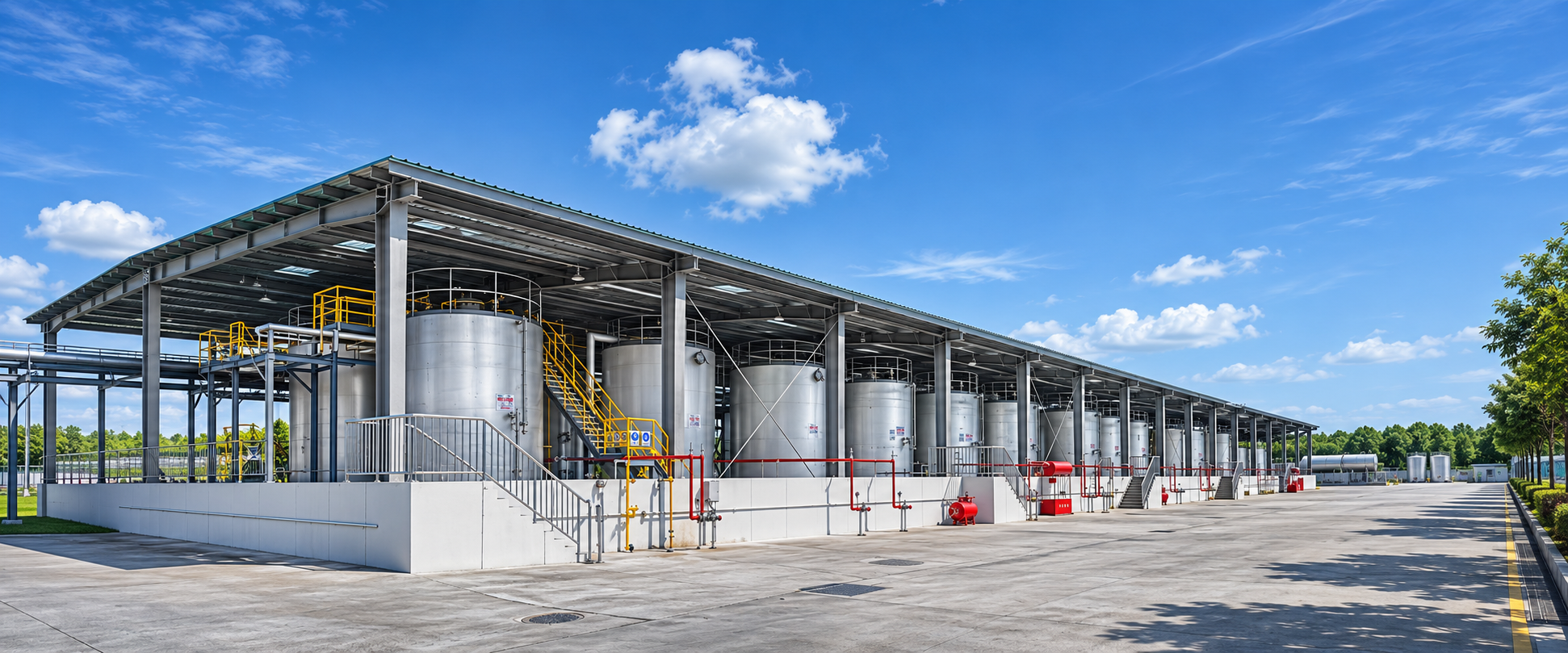
For customers planning repeat orders, the manufacturing discussion should extend beyond the first batch. Demand forecasts, raw material lead times, safety stock expectations, batch size, production slots, quality trends, and change-control arrangements can all affect supply continuity.
Where a process is suitable for repeat production, a supply plan can be discussed around the customer's forecast and agreed ordering conditions. Any annual capacity, reserved production volume, or guaranteed lead time should only be stated after internal capacity and supply-chain review.
Scale-Up & Analytical Support – Additional FAQs
Can every laboratory process be scaled up directly?
No. A laboratory process may need further evaluation or optimization before scale-up. Heat transfer, mixing, mass transfer, reaction safety, impurity formation, equipment compatibility, and purification can change with scale.
What information is needed for a scale-up assessment?
Useful information includes the laboratory procedure, batch size, reaction conditions, material balance, analytical results, known safety information, raw material specifications, and the target production quantity.
Can you manufacture according to our existing specification?
An existing specification can be reviewed as the starting point. The parties should confirm whether the test methods, impurity limits, sampling plan, packaging, and acceptance criteria are technically practical and mutually understood.
Can you guarantee the same quality for every batch?
Batch consistency depends on process control, raw material variation, equipment, sampling, analytical methods, and defined acceptance criteria. The appropriate controls should be established and verified for the specific product and process; absolute guarantees should not be made without supporting data.
Can you provide a CoA and SDS?
The availability and format of a CoA, SDS, and other agreed documents should be confirmed for the specific product and project. A CoA should reflect the agreed test items and actual batch results.
Our Partners



Your Next Chemical Project Starts Here
From specialty chemical sourcing to custom synthesis and manufacturing, we're ready to discuss your requirements.